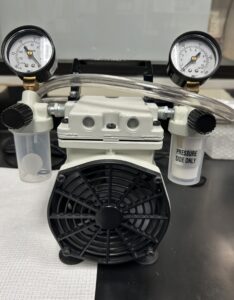


A vacuum pump is an essential piece of equipment in a water treatment laboratory, providing the suction needed for several critical testing procedures. It is commonly used for membrane filtration, where water samples are drawn through filter membranes to analyze bacteria, algae, and total suspended solids (TSS). Vacuum pumps are also used to remove dissolved gases, such as oxygen and carbon dioxide, from water samples before chemical analysis, helping improve test accuracy. In addition, they assist with the safe aspiration and disposal of liquid waste from laboratory containers. The two most common types found in water laboratories are oil-free diaphragm pumps and traditional water aspirators, each designed to provide reliable vacuum pressure for routine analytical work.