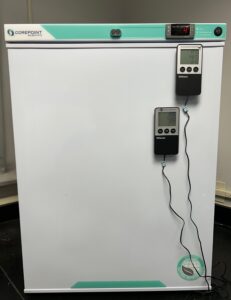


A laboratory refrigerator is an essential piece of equipment in a water treatment laboratory. It provides controlled, cool storage for water samples, reagents, standards, and other materials that require refrigeration to maintain their quality and integrity.
Proper temperature control helps preserve water samples before analysis. Samples must be stored within the temperature ranges and analyzed within the holding times specified for each test. Refrigeration slows biological, chemical, and physical changes that could affect results, helping ensure that testing accurately reflects the sample’s condition at the time of collection.
Refrigerator temperatures are routinely monitored and documented as part of the laboratory’s quality assurance procedures. Regular cleaning and maintenance help ensure reliable operation.
Proper organization and labeling are equally important. Samples and laboratory materials should be clearly identified, dated, and stored in designated areas. Chemicals and reagents must follow their specific storage requirements and should only be stored in refrigerators designed and approved for that purpose.
By maintaining reliable temperature-controlled storage, the laboratory refrigerator protects sample integrity, supports accurate testing, and helps the laboratory meet applicable quality and regulatory requirements.