

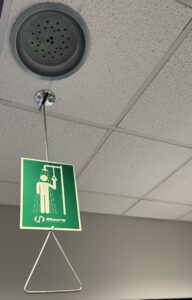
Safety is an essential part of working in a water treatment laboratory. One important piece of emergency equipment is the emergency shower, which provides immediate access to a large volume of water if an employee is accidentally exposed to hazardous chemicals or corrosive substances.
Water treatment laboratory personnel may work with acids, bases, disinfectants, and other chemical reagents. If a spill or splash occurs, quickly using an emergency shower can help remove contaminants from the skin and clothing and reduce the severity of exposure.
💧 Emergency Shower Safety Facts
🔹 Water Flow: Emergency showers must deliver at least 20 gallons per minute (75.7 liters per minute).
🔹 15-Minute Flush: Plumbed emergency showers must provide a continuous supply of water for at least 15 minutes.
🔹 Tepid Water: Water should be between 60°F and 100°F (15°C–38°C) to help make an extended emergency rinse safer and more tolerable.
🔹 Hands-Free Operation: Once activated, the valve stays open without the employee having to hold it, allowing both hands to be used to remove contaminated clothing.
🔹 Always Accessible: Emergency showers should remain unobstructed and readily accessible at all times.
🔹 Routine Inspections Matter: Regular inspections and maintenance help ensure the shower is ready to operate properly when every second counts.
⚠️ BE PREPARED BEFORE AN EMERGENCY
Laboratory personnel should know where emergency equipment is located and how to activate it before beginning work with hazardous chemicals.
Laboratory safety is a priority. Knowing how to respond and having properly maintained emergency equipment helps protect the people who work every day to help provide our community with safe, high-quality drinking water. 💧🧪🚿
#RockdaleWaterResources #LaboratorySafety #WaterTreatment #SafetyFirst #WaterProfessionals
