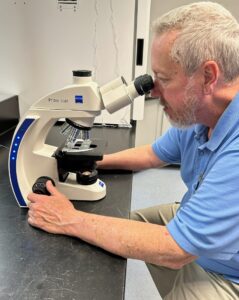


Lab Coordinator Jeff Cawley is shown using a microscope in the water treatment laboratory to closely examine water samples and support daily water quality monitoring efforts. Microscopes are essential tools in water treatment laboratories because they allow staff to identify microorganisms, algae, sediment particles, and other contaminants that may be present in the water supply. Through magnified visual analysis, laboratory personnel can monitor biological activity, evaluate treatment performance, detect potential process issues, and help ensure regulatory compliance. Microscopes are commonly used for microbiological testing, floc examination, and troubleshooting filtration or treatment processes — all of which play a vital role in maintaining safe, clean, and reliable drinking water for the community